Card Concepts
Eight card-back candidates for the Lumenal tarot deck and the Lumenal Pathways Oracle, generated in the spirit of Ciro Marchetti's fantasy decks (Gilded Tarot, Legacy of the Divine): saturated jewel tones, luminous light sources, and dense gold ornament. These deliberately ignore the current Lumenal design system — the goal is a wide field of ideas. Six lean tarot, two lean oracle; any direction could be adapted to either deck. A proper card back must read identically upside down (so reversed cards aren't telegraphed) — each concept was generated with 180° rotational symmetry in mind, and the notes flag where a production redraw would need to tighten it.
Card Backs
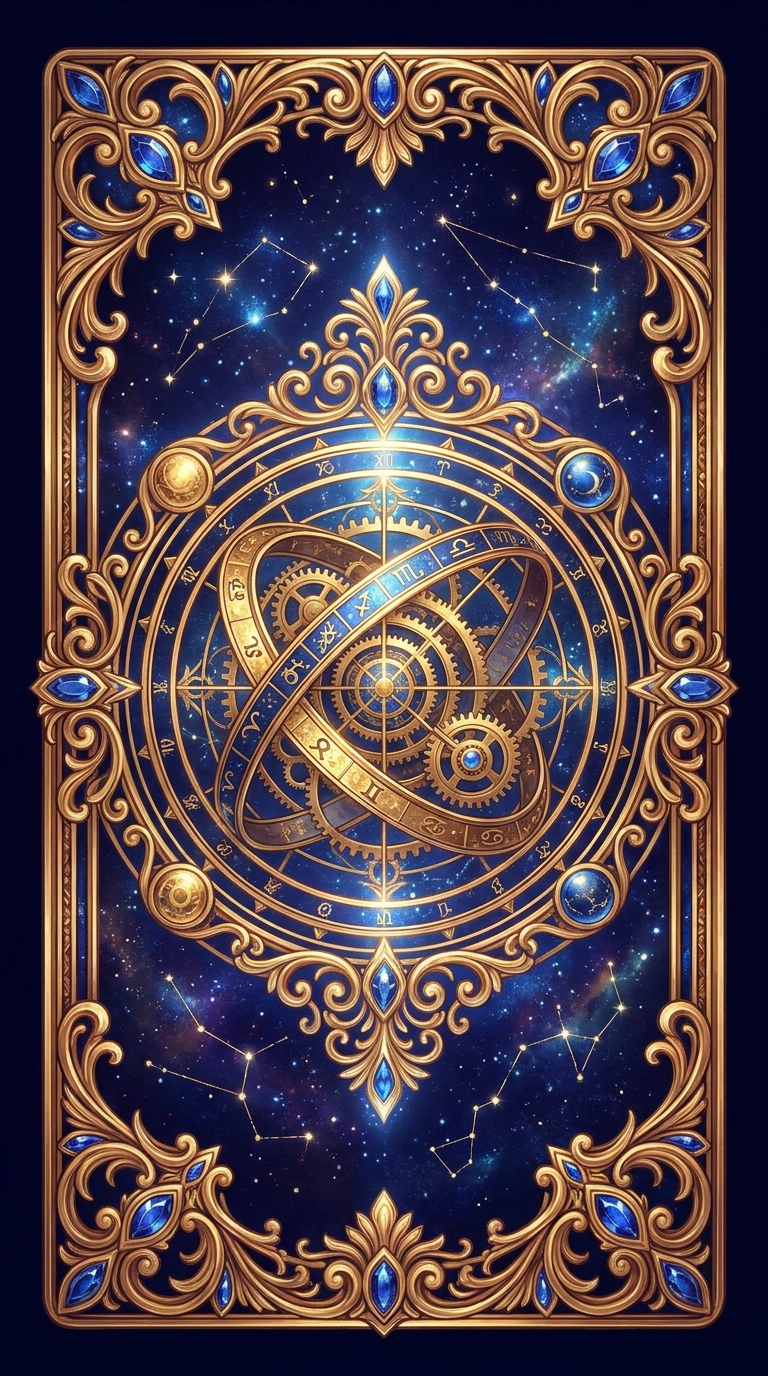
Gilded Clockwork
An armillary sphere of interlocking golden gears and zodiac rings over a starfield, framed in scrollwork with sapphire inlays. The closest cousin to Marchetti's Gilded Tarot — mechanical, celestial, opulent.
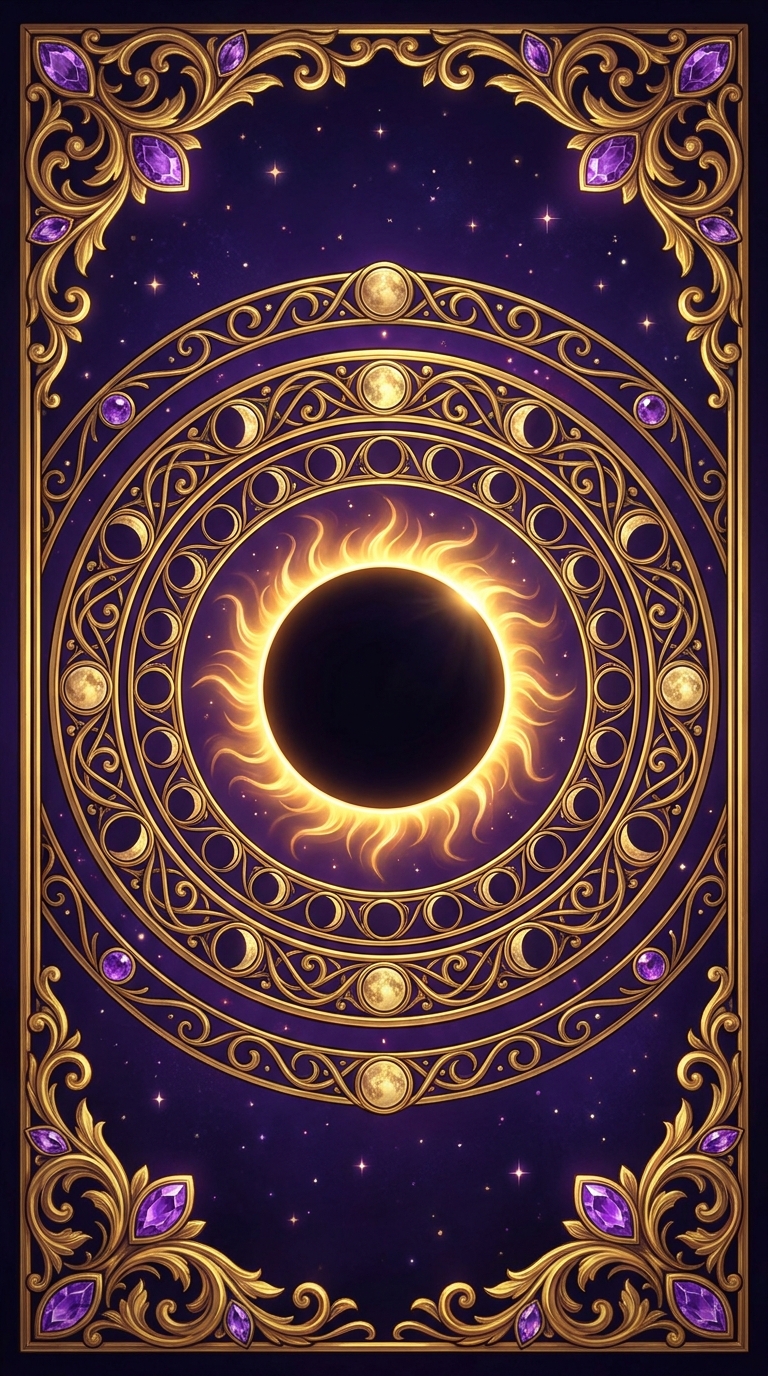
Eclipse Corona
A total eclipse blazing at the center of concentric moon-phase rings on deep violet, with amethyst corner ornament. Instant focal point, genuinely rotation-proof, and echoes the Eclipse logo candidate — the strongest brand tie-in of the set.
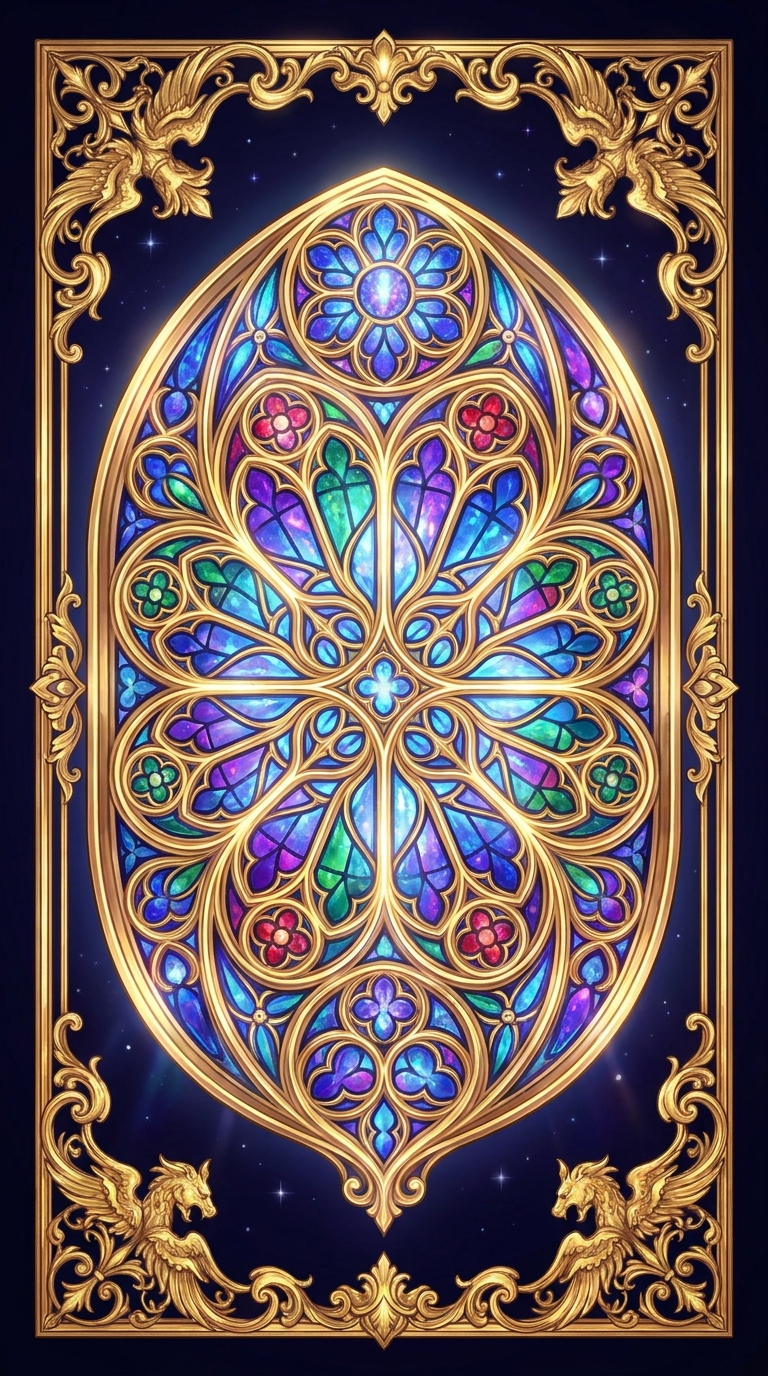
Rose Window
A gothic stained-glass mandorla glowing from behind — sapphire, violet, emerald and ruby panes in gold tracery, with gilded griffins in the corners. Sacred-architecture mood; the most "cathedral" of the set.
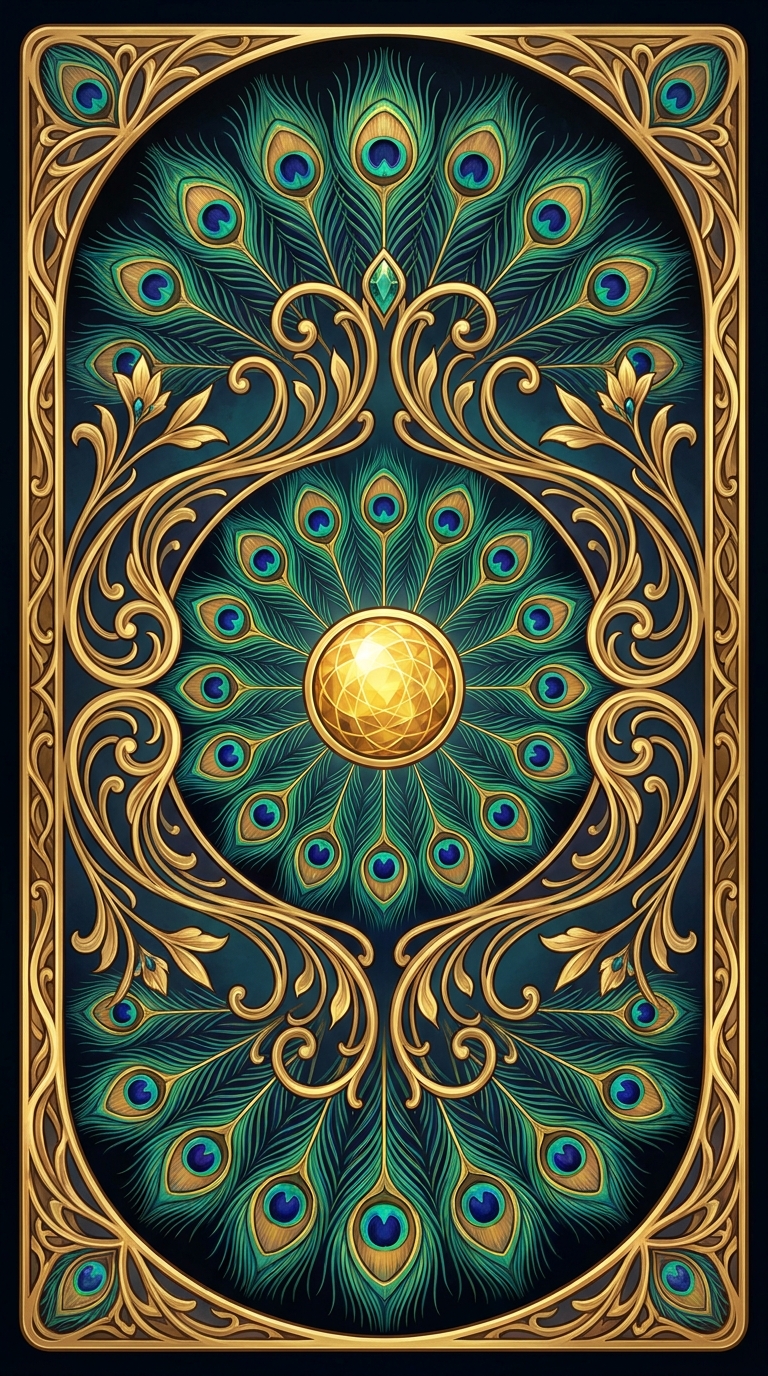
Peacock Nouveau
Mirrored peacock plumes fanning toward a faceted golden orb, wrapped in flowing art-nouveau goldwork on teal-black. Departs furthest from the indigo/gold house palette — iridescent emerald and sapphire — and feels the most like a luxury printed deck.
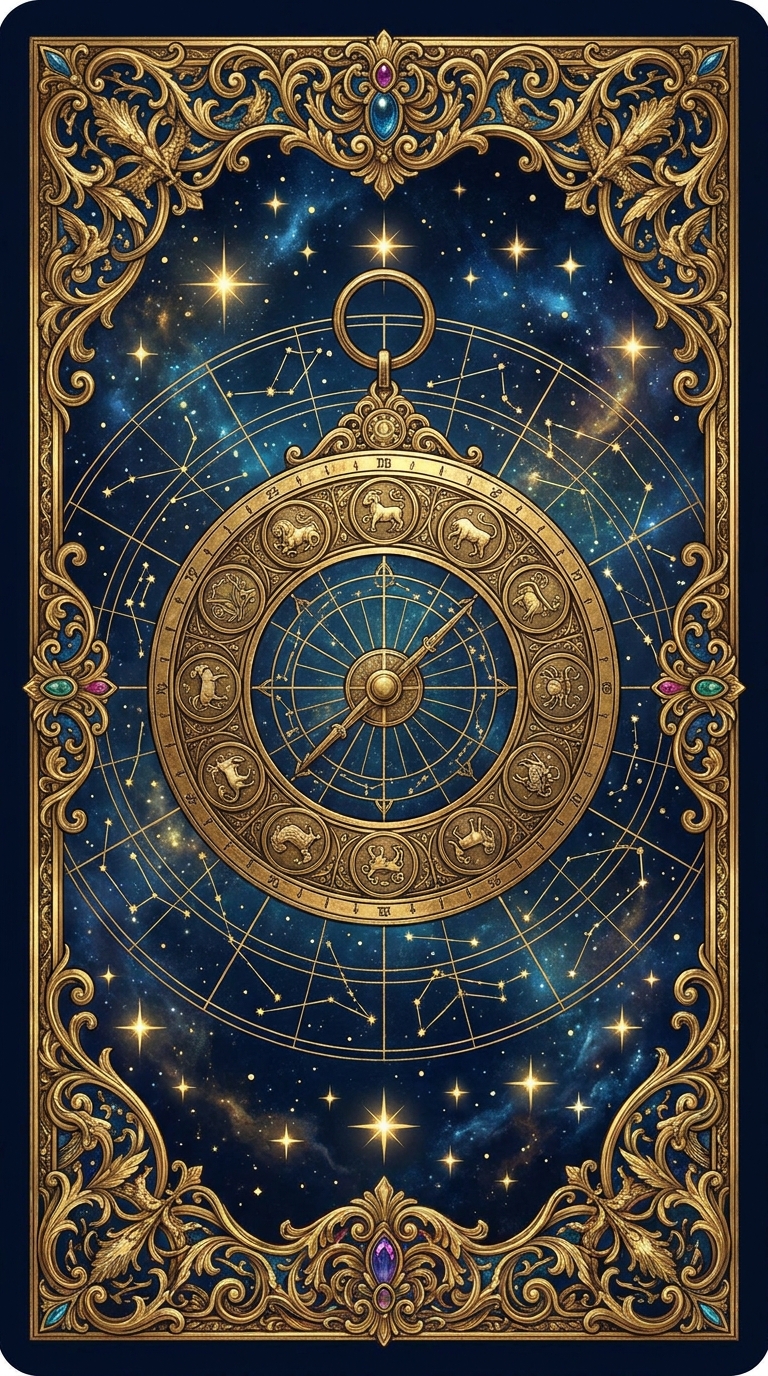
Zodiac Astrolabe
An engraved brass astrolabe ringed by twelve zodiac medallions, floating over gold constellation charts. Ties the tarot deck to the astrology side of the platform — one object that says "all eight systems live here."
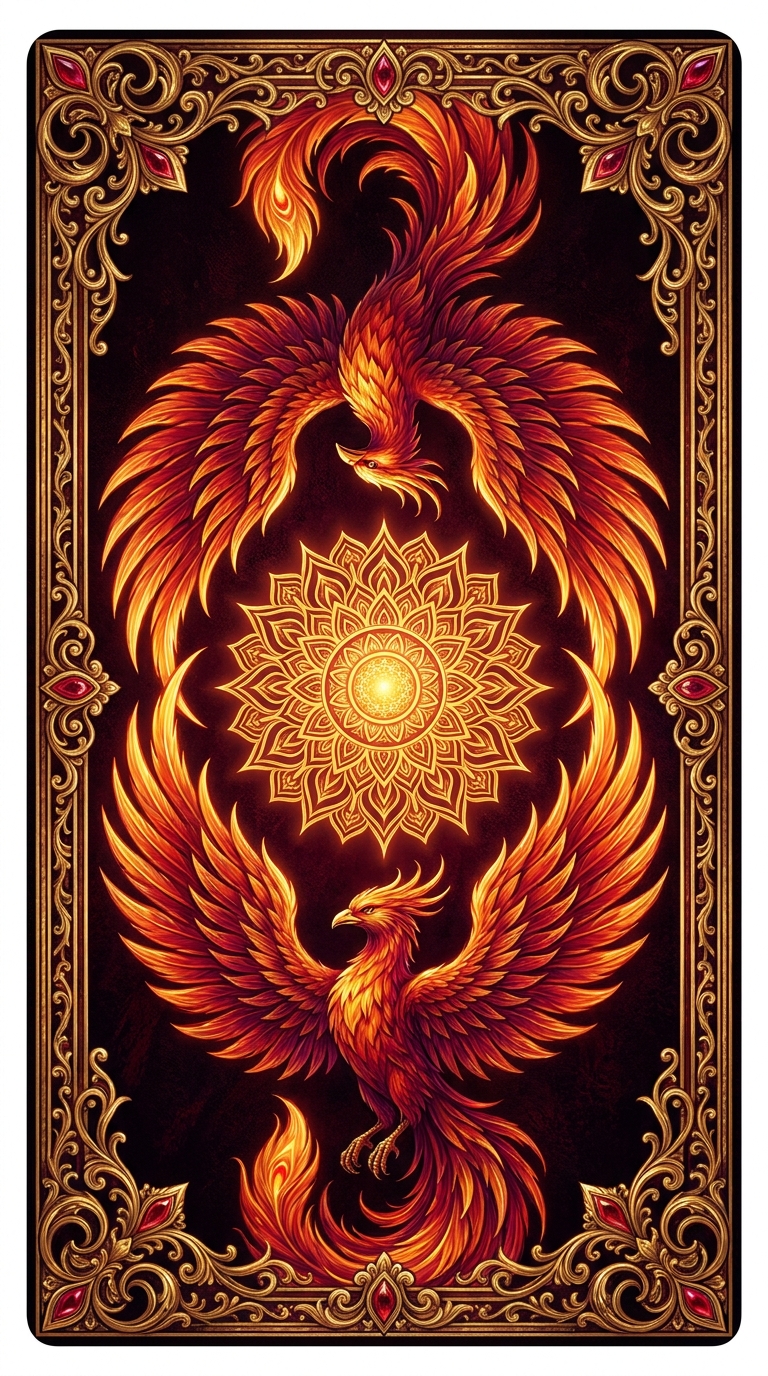
Twin Phoenix
Two flame-feathered phoenixes circling a radiant mandala sun — crimson, ember and gold on near-black with ruby-set filigree. The warmest and most dramatic concept; transformation and renewal as the deck's story.
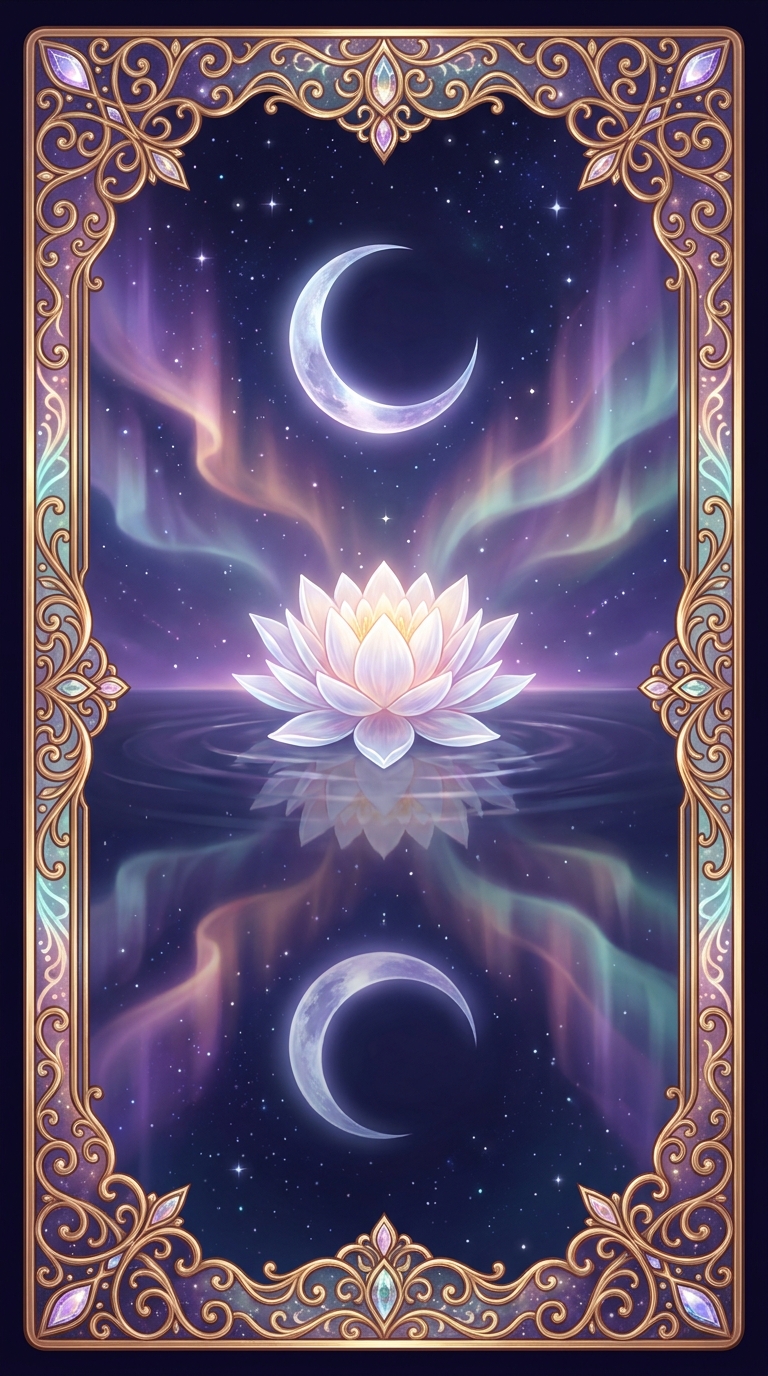
Moon Garden
A luminous lotus on still water, crescent moon above and mirrored below, aurora ribbons in violet, rose-gold and teal. Softer and dreamier than the tarot directions — a natural voice for the Lumenal Pathways Oracle, and it echoes the Lotus Rising logo candidate.
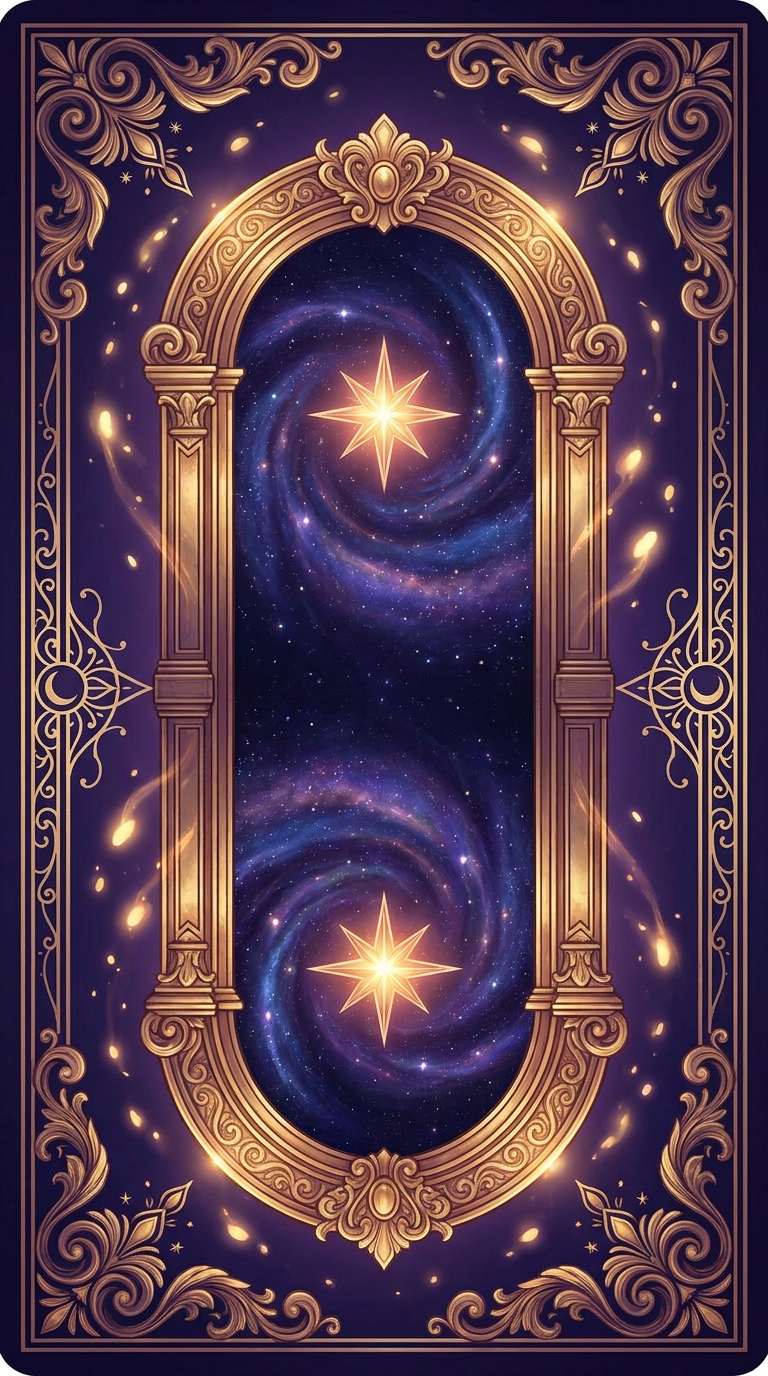
The Threshold
Twin golden archways meeting at the middle, each opening onto a spiral of stars with a radiant eight-pointed star — a doorway you can enter from either end. Picks up the Threshold logo candidate and the "readings as a doorway" story.
Card Fronts
Five sample fronts in the same jewel-tone direction — three Major Arcana for the tarot deck and two Lumenal Pathways Oracle cards. Tarot fronts carry the traditional structure (roman-numeral medallion, ornate border, title banner); oracle fronts run softer and dreamier with a lighter border. Titles are AI-rendered and came out clean on all five, but a production pass would still replace them with real typography. These are sized for sample printing on blank tarot cards (~280 DPI at 2.75 × 4.75″).
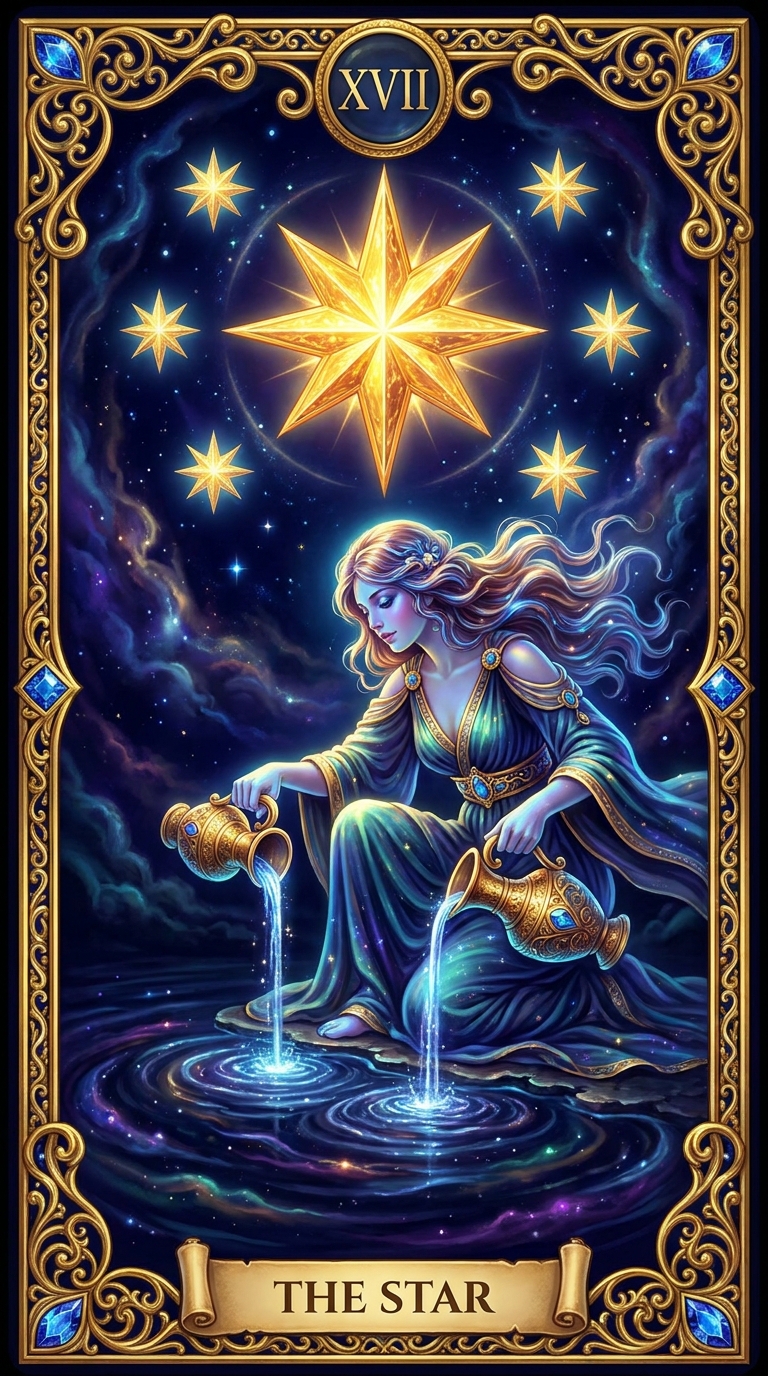
The Star · XVII
A woman pouring liquid starlight into a cosmic pool beneath a blazing eight-pointed star — the card that most belongs to the Lumenal name, rendered with the Eclipse-back border language.
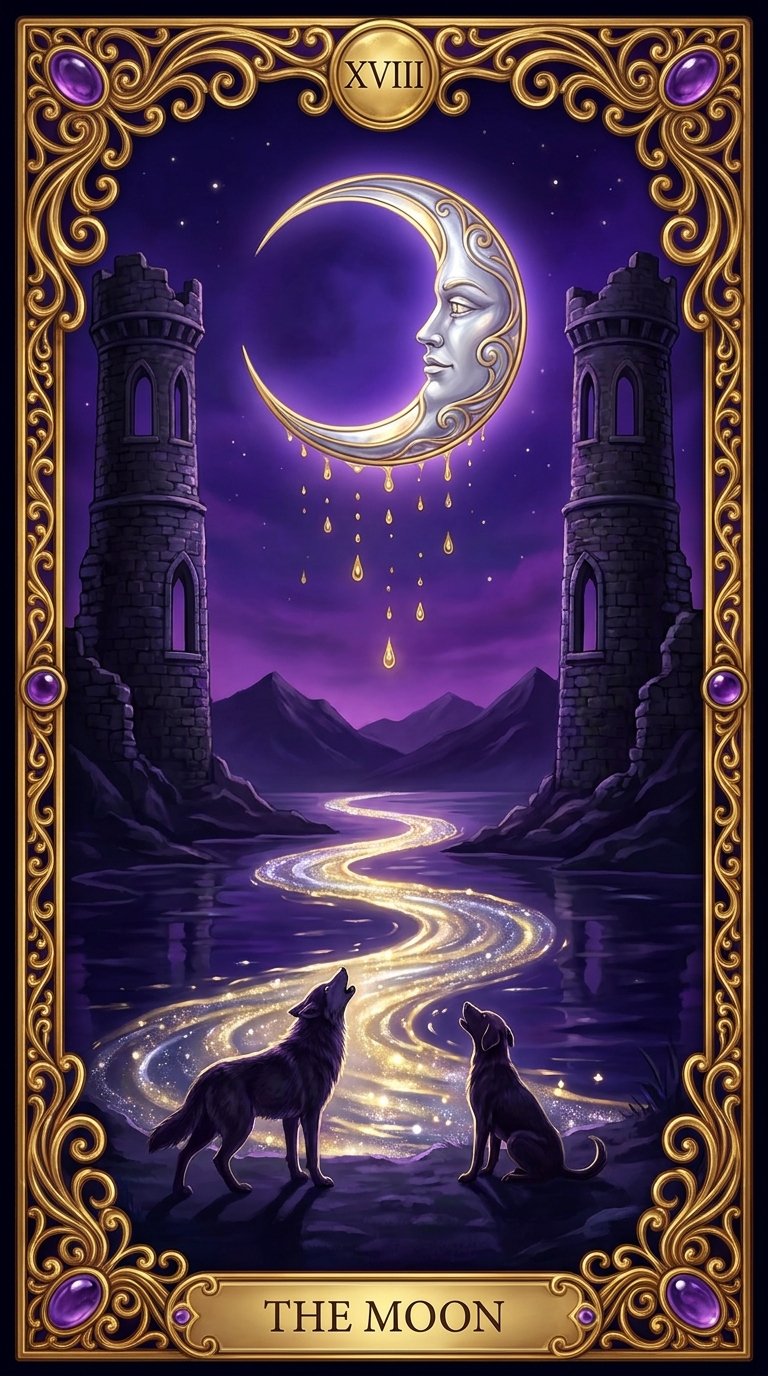
The Moon · XVIII
A sculpted-face crescent weeping drops of golden light between twin towers, wolf and dog at the moonlit path — the full traditional iconography in the violet-gold palette.
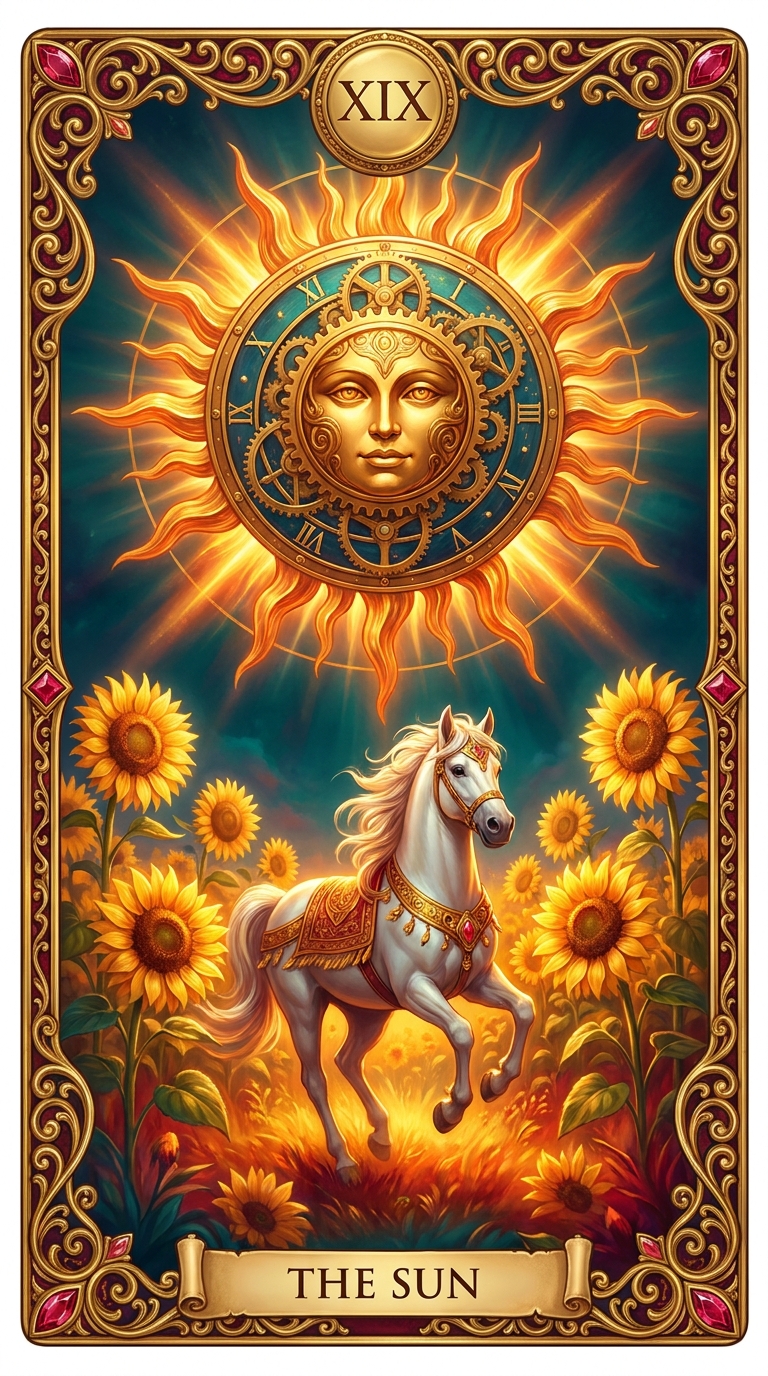
The Sun · XIX
A clockwork sun with a sculpted golden face over sunflowers and a white horse — the gear rings tie the fronts to the Gilded Clockwork back direction.
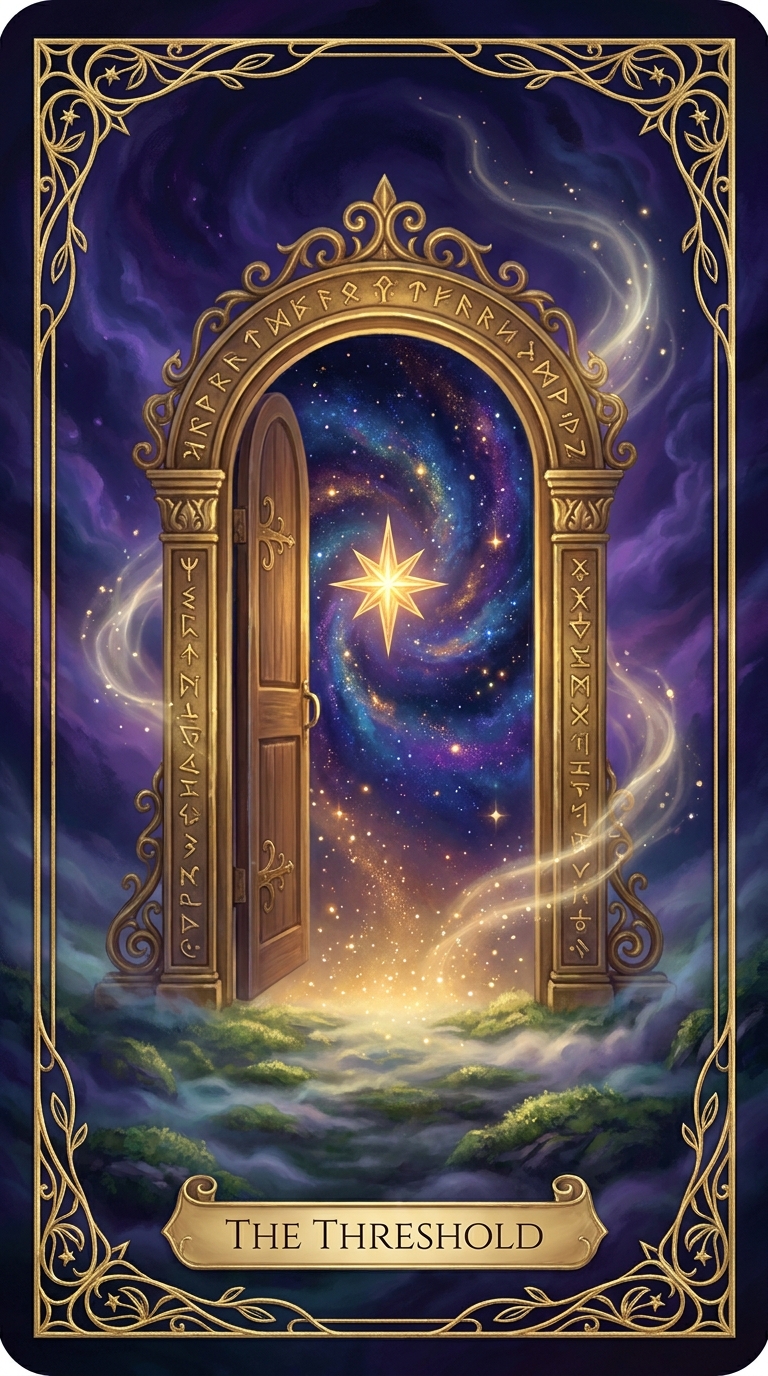
The Threshold
A rune-carved golden doorway standing open onto a star spiral — the oracle-deck voice of the Threshold back and logo candidate, with a lighter vine border.
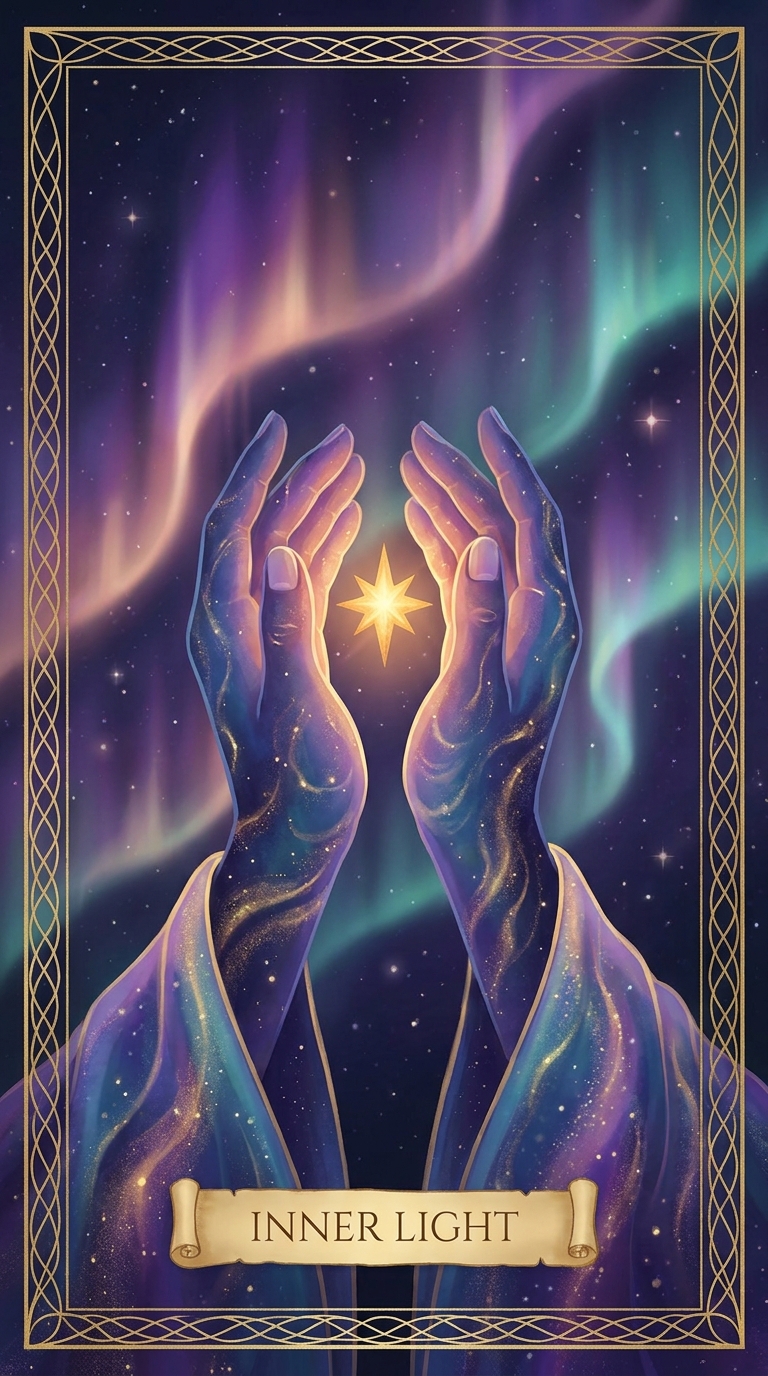
Inner Light
Star-dusted hands cradling a small blazing star under aurora ribbons — the Offering logo candidate as a card, in the Moon Garden palette.
Printing samples
- Files: all card images live in
references/assets/card-backs/—back-*.jpgandfront-*.jpg, each 768 × 1376 px. - Resolution: that's ~280 DPI at standard tarot size (2.75 × 4.75″) — fine for laser-printed samples; final print runs would want 300+ DPI upscales.
- Sizing: print at exactly 2.75″ wide (or your blanks' true width) with "actual size" rather than "fit to page", and expect a hair of trim since the art has no bleed margin.
- If useful, a print-ready PDF (multiple cards per letter sheet, cut marks, back/front alignment for duplex) can be generated — say the word.
How to choose
- Reversal-proofing: 02, 07 and 08 are already effectively rotation-safe; 05 (hanging loop) and 06 (bird poses) need the most redraw work.
- Brand pairing: 02 ↔ Eclipse logo, 05 ↔ Orbits, 07 ↔ Lotus Rising, 08 ↔ The Threshold — picking a matched pair gives the deck and the mark one shared story.
- Two-deck system: the strongest combination is likely one saturated tarot back (02, 04 or 06) plus a softer oracle sibling (07 or 08) sharing the same border language, so the decks read as one family at a glance.
- In-app behavior: these will mostly be seen at thumbnail size during shuffles and spreads — 02 and 04 hold their identity smallest; 01 and 05 reward zooming but blur at speed.
- Winners get a refinement round: exact-symmetry redraw, small-size crops, a face-card border system derived from the back, and light/dark table variants.